Dispatch From Paris
Surprise! (Pronounced sur-preez, like the French do it)

“If "Sex and the City" taught us anything, it's that Paris is the only city in the world that New Yorkers actually fantasize about.”
- Elizabeth Bard
“During his career he [Baron Haussmann] showed a maniacal ambition, an impudent opportunism and was, whatever he did, a genius of showmanship.”
- Josephy Valynseele on Baron Haussmann, the urban planner of modern Paris
Hello everyone!
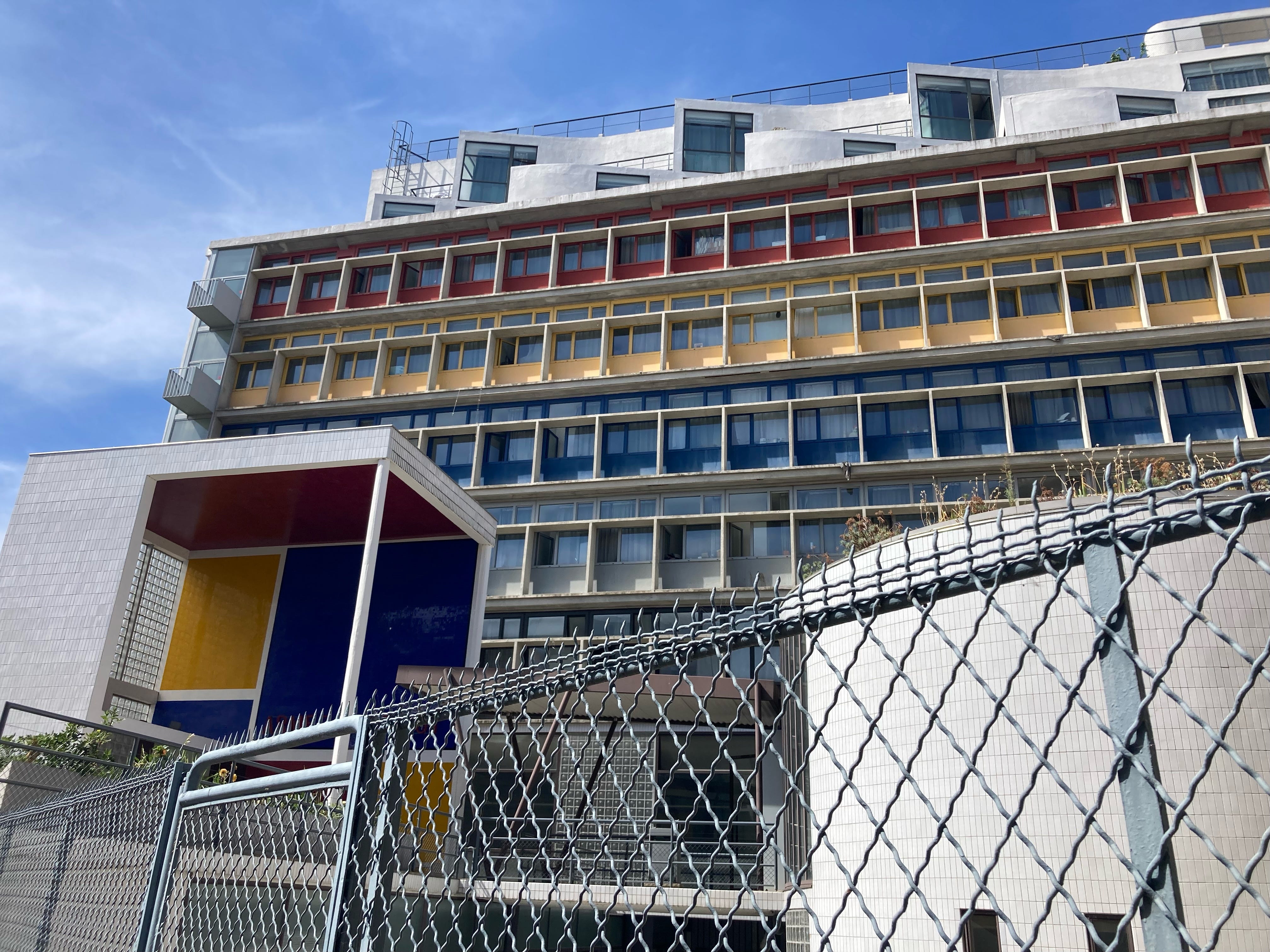
This week I am taking break from our regularly scheduled programming about the NYC housing cost to say hello from Paris! I’ve rented an apartment here for the next three weeks until I head back to Boston for school, and I wanted to share my thoughts about how the transit structure and urban fabric differ from the U.S.
Paris is famous for being a beautiful, lively, and livable city, but is also famous for not living up to expectations. I can’t say I’m an expert on the city, but here’s what I’ve noticed:
Civic Spaces, Large & Small
One of the most striking features of Paris is its robust out-of-doors civic life: parks filled with people, outdoor dining (with real tables and chairs, not wooden huts), and sidewalks sporting a constant stream of pedestrians. Even compared to the much larger city of NYC, Paris has a very rich and diverse street life. Now this could have many reasons: maybe the lack of air conditioning means its too hot to inside, or maybe it’s the fact that everyone in the city is a tourist (especially in August), or maybe it’s “just French culture” to enjoy parks and city squares more than Americans.
However, I’d argue that this is by design, and some features of the urban landscape encourage the pedestrian activity that makes Parisian streets so wonderful:
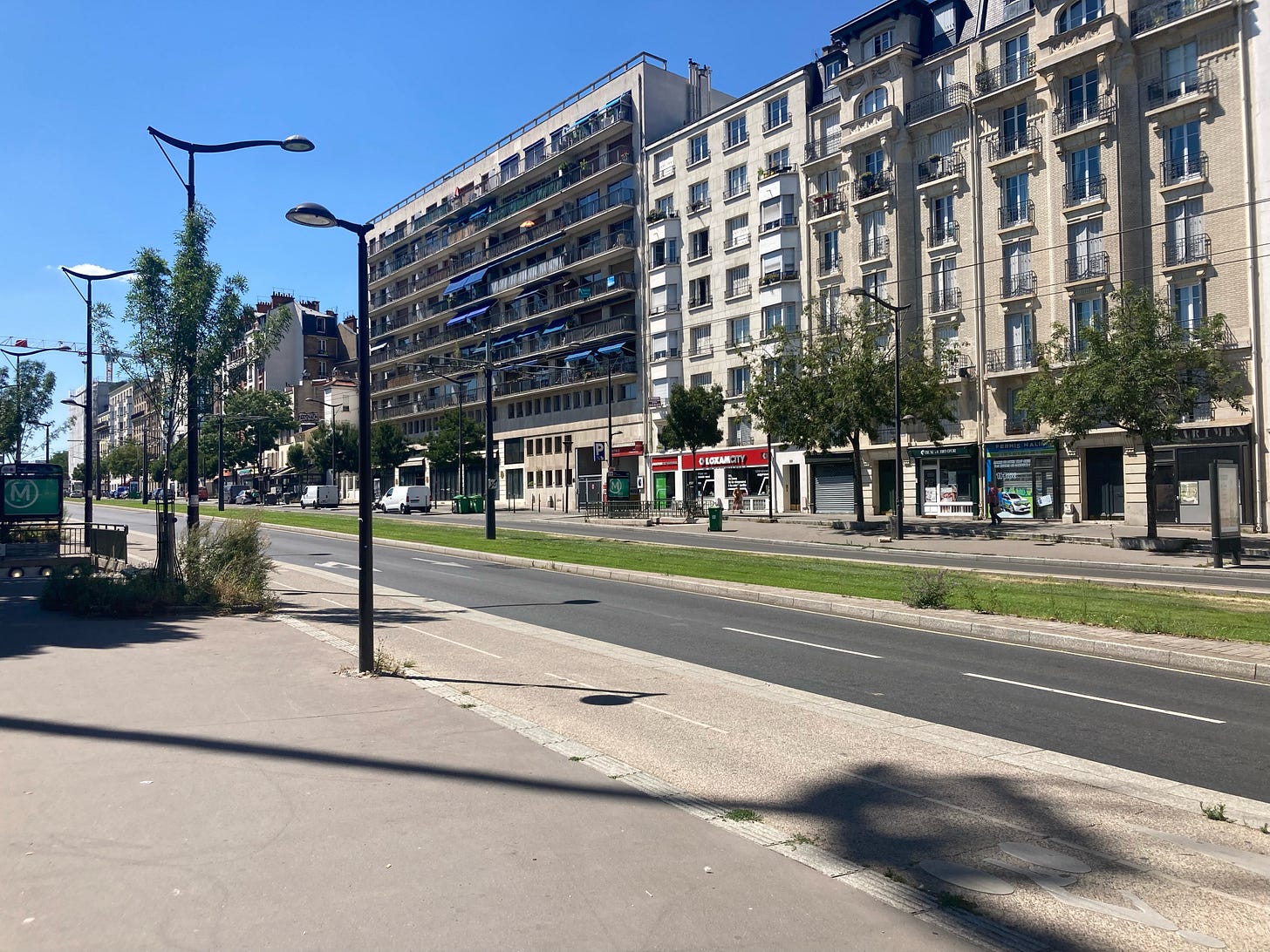
Wide sidewalks. And I mean WIDE. Wider than the car street. Like wider than you have ever seen in the U.S. Wide enough to fit a café and a bike lane and bi-directional pedestrian traffic
Narrow car lanes. The car lanes on Parisian streets are tiny! To make room for the wide sidewalks of course.
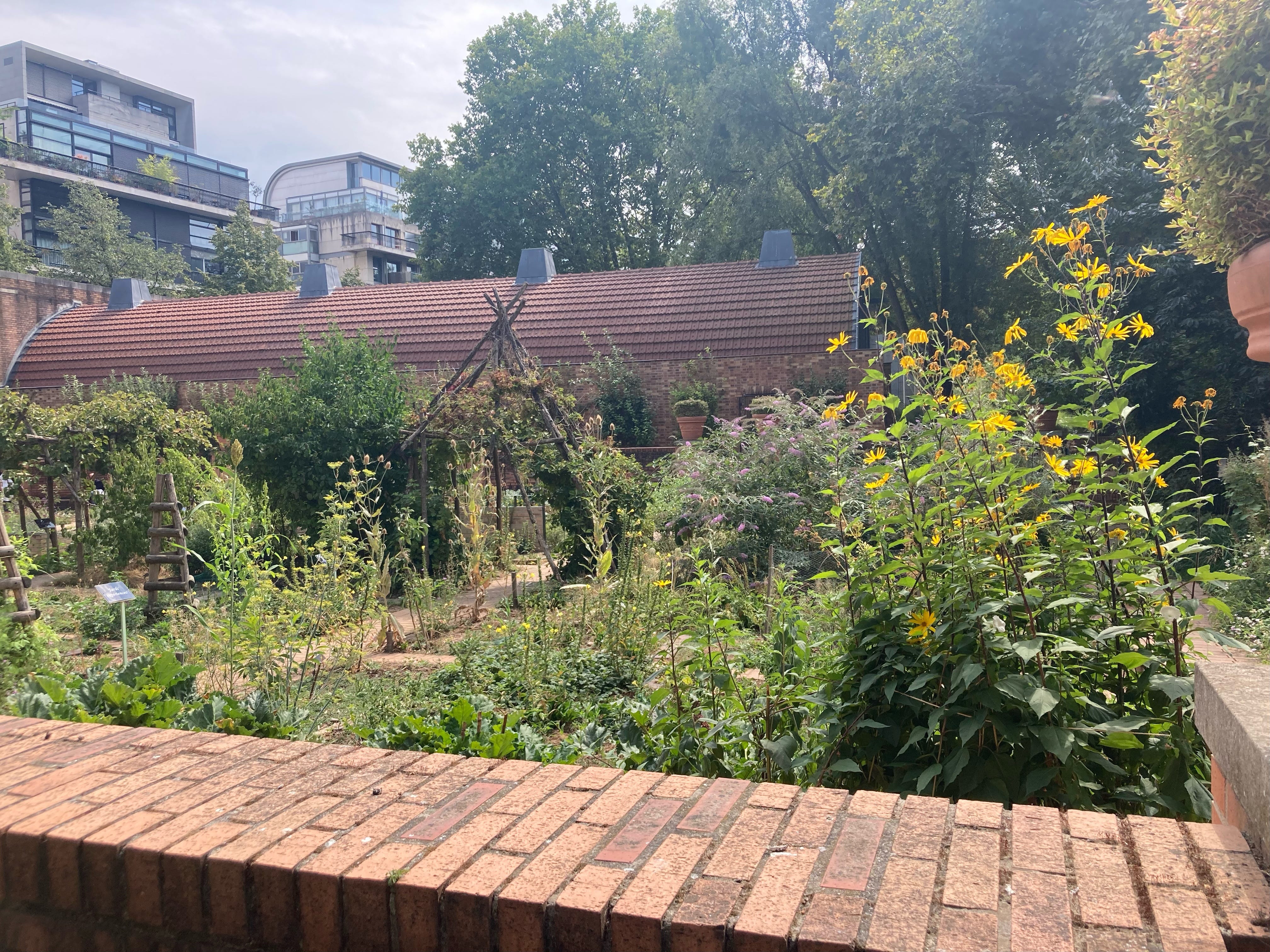
Little pedestrian squares in every neighborhood. In Paris, you’re always coming upon a garden or a park or a dog run unexpectedly. These little squares calm car traffic, allow for interesting pedestrian cut-throughs, local gathering places, provide spaces for cafes and bars, and knit together the urban fabric. One interesting note here is that size matters - one hundred one acre parks are better than a single hundred acre park. While large parks are lovely (and I will always love Prospect Park), they separate neighborhoods and create social vacuums rather than bring pedestrian infrastructure closer together.
Reclaiming waterfront space - Cities around the world have done a great job of this as well in the past few decades (like Boston’s Charles River Waterfront or NYC’s West Side Park) and Paris is no exception. But what sets Paris apart from American cities is the number of bars, cafés and recreational facilities that are built into the waterfront space. In one half-mile stretch of the Seine, there is a pool, a hotel, several restaurants, and a dozen bars on a single side of the river. That’s more than you can find in the park that runs along the entire west side of Manhattan!
NO HIGHWAYS. No highways in the city. Not even underground. No BQE, No Cross-Bronx, No Grand Central Parkway. Just No Highways. Period.
With all those wonderful public spaces so easily and safely accessible, why would you have your glass of wine anywhere but in the park?
Trains, Trains, Trains
My experience with the Paris Metro has been more mixed than I expected (perhaps this is my example of Paris Syndrome!). While the inner-city Metro lines are fantastic - clean, rapid, on time, less than a 5 minute wait for a train, well-designed walk-through cars - the RER trains have not been as impressive. My apartment is on the RER C line, and I have found myself frequently waiting a long time for trains in stations that are not very clean or well maintained. Additionally they are doing “les grands travaux” this summer on the metro, which means that a lot of stops and lines are closed for maintenance. Regardless, there are some transport nuggets of wisdom that the Parisians have to share:
Clean tiles and high vaulted ceilings in the Metro make the biggest difference in the quality of travel
Have one ticket for your trains/trams/regional rail in the city. For 24 euro I can ride anywhere in Paris on any train, tram, or bus line for a week! By comparison, the NYC weekly metrocard is $33 and does not include regional rail or Airtrain service. (This would make such a big difference in Boston if you could tap on the commuter rail from Back Bay to the South End instead of having to buy a ticket at the desk)
You can run long and short trains on the same track if you put indicators on the platform for where the train ends. Save energy and money by running smaller trains at off-peak times!
Use all door boarding on trams. People will validate their own cards - I promise, I watched everyone do it
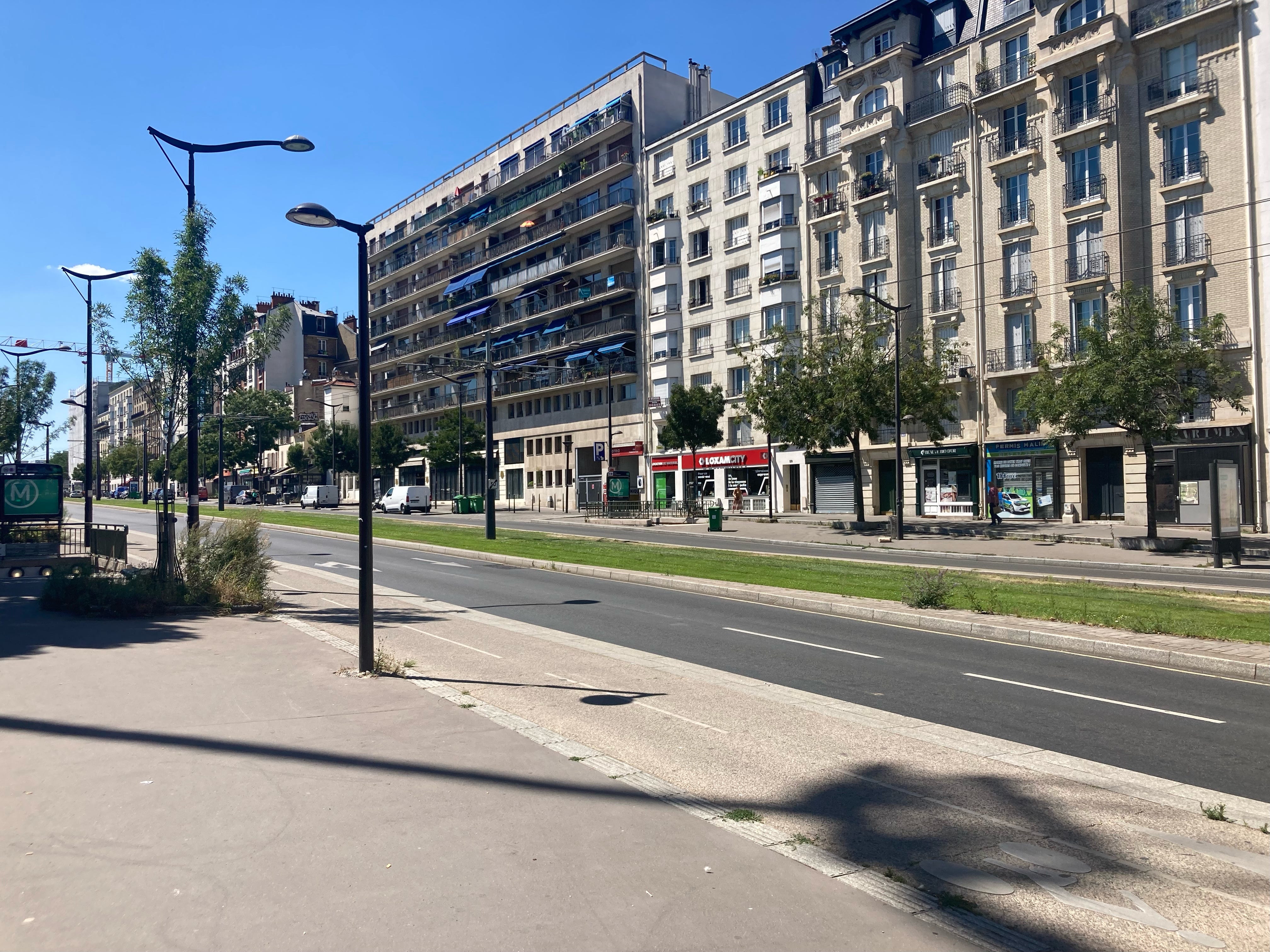
Grow grass on your tram lines!
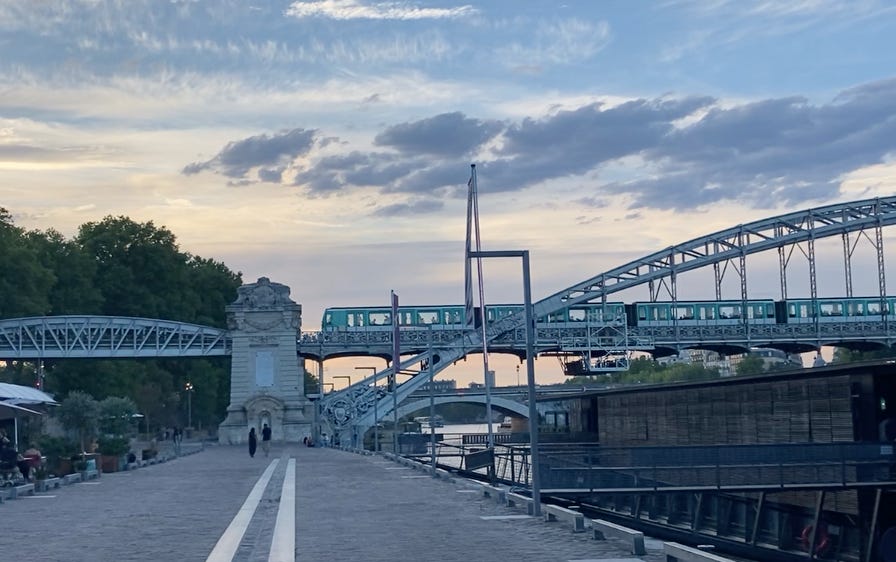
Train bridges are the best bridges
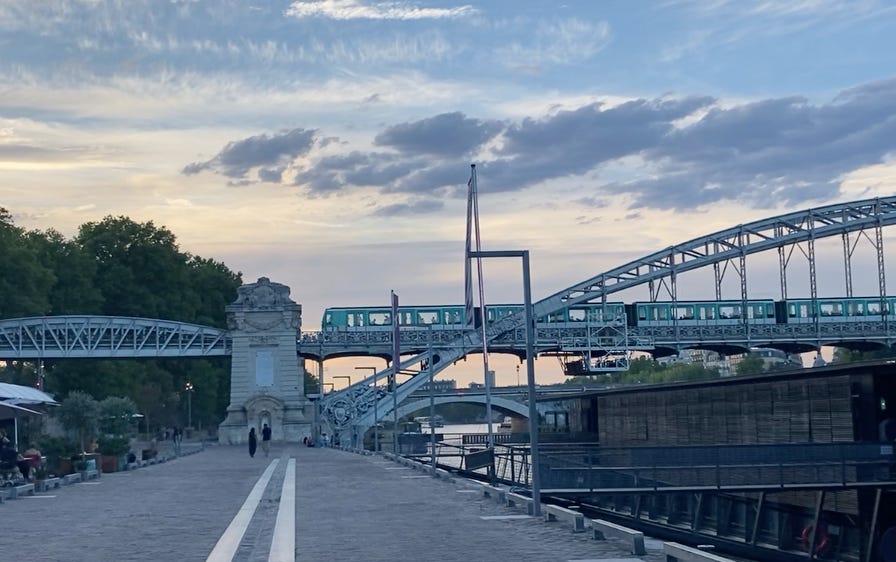
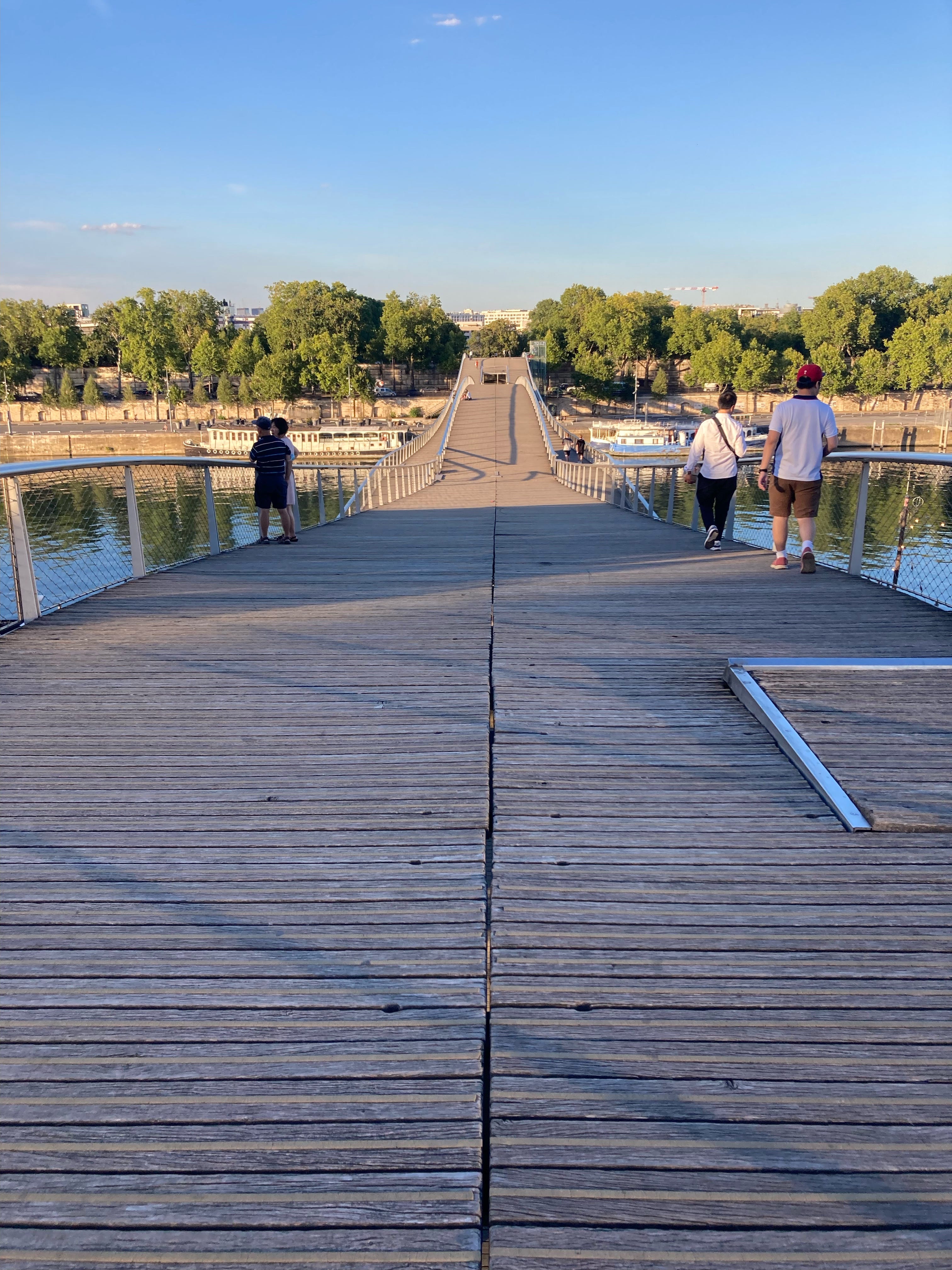
OK, Pedestrian bridges are also the best bridges
Architecture
I must confess that it has been 3 days and I still haven’t seen the Eiffel Tour… I guess not every apartment in Paris has a view of the Eiffel Tour? In fact, my apartment is in the far far far southeastern corner of Paris in a neighborhood that was only developed in the 1990s. The neighborhood is a capped railway project, which means that they covered up some rail yards and built a neighborhood on top of them, this is the same thing that they’ve done in Hudson Yards in New York City.
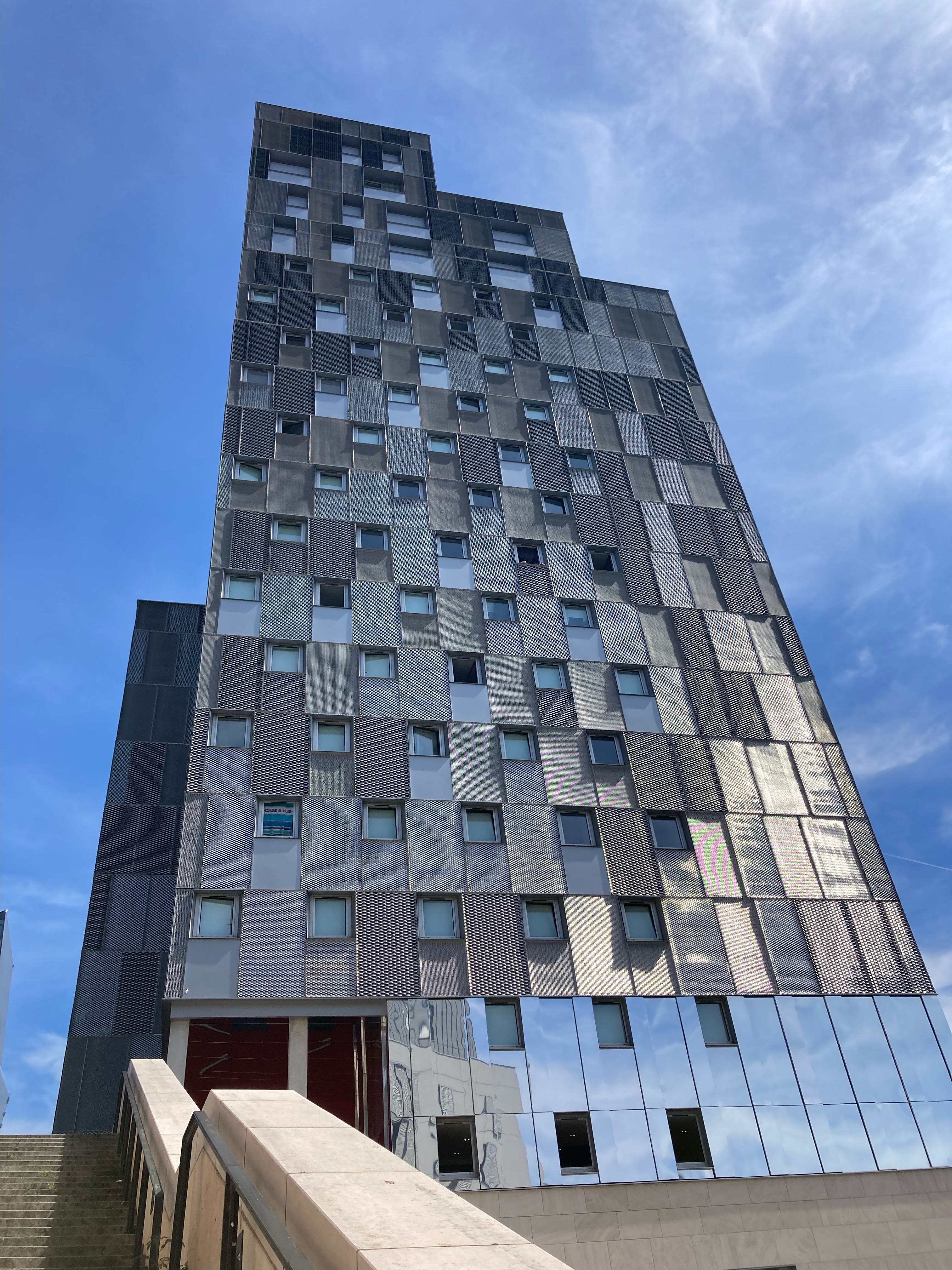
While the architecture I’ve been mostly exposed to here in Paris is of a style that would remind one of any early 2000s development in the United States (apartments with big glass windows and ground level retail) there is something about the architecture that sets this apart from a design perspective. Perhaps it’s an embrace of asymmetry or non-traditional building shapes, maybe it’s the stylistic touches that cost more but improve the façade (like a post-modernist finial or gargoyle), or maybe it’s the integration with the size & shape of the streetscape that really makes these babies pop! All I can say is that where Hudson Yards is a soulless nightmare, this neighborhood really has that je ne sais quoi!
A Bientôt mes amis!
Bennett Capozzi
City Speak #9
That is very informative. I definitely look forward to the next one.
Thank you for sharing.